Healthy teeth do not happen by accident. You build them with steady care and smart choices. Fluoride and sealant treatments protect your teeth from silent damage that grows over time. These treatments lower your risk of cavities. They also help you avoid painful infections and costly emergency visits. You may think brushing and flossing are enough. They help. Still, fluoride and sealants create a stronger shield where your toothbrush cannot reach well. This protection matters for you and your child. It matters even more if you have a history of tooth decay. Many families search for Smithfield pediatric dental care that keeps children calm and safe. Fluoride and sealants support that goal. They are quick, simple, and noninvasive treatments. They fit easily into regular checkups. You gain more control over your health. You also gain relief, knowing you are not waiting for the next dental crisis.
1. Fluoride strengthens weak tooth enamel
Tooth enamel faces constant attacks from food, drink, and mouth bacteria. Over time, this weakens the surface and opens the door for cavities. Fluoride rebuilds that surface. It pulls minerals back into the enamel so teeth stay firm under daily use.
Research from the Centers for Disease Control and Prevention shows that community water with fluoride lowers tooth decay in children and adults. Fluoride treatments at the dentist work in a similar way. They place a higher level of fluoride right where you need it most.
You may receive fluoride as a foam, gel, or varnish during a checkup. The process is quick and painless. You sit in the chair. The dental team dries your teeth. They place the fluoride. You wait a short time. Then you go back to your day. There is no recovery time.
For many adults, this is the first step to stop a cycle of repeat fillings. For children, it creates a stronger base before decay starts.
2. Sealants block food and germs in deep grooves
Back teeth have deep grooves that trap food and germs. A toothbrush has trouble reaching into those tight spots. That trapped mix then eats away at the enamel. Sealants solve this problem.
Sealants are thin protective layers that a dentist paints onto the chewing surfaces of back teeth. They harden and act like a shield. Food and germs cannot sit in the grooves as easily. The result is fewer cavities in those teeth that do the hardest work.
The American Dental Association notes that sealants can reduce decay in molars in children by a large percentage.
The process is simple.
- The dentist cleans and dries the tooth.
- The dentist applies a gentle solution that helps the sealant stick.
- The dentist rinses and dries the tooth again.
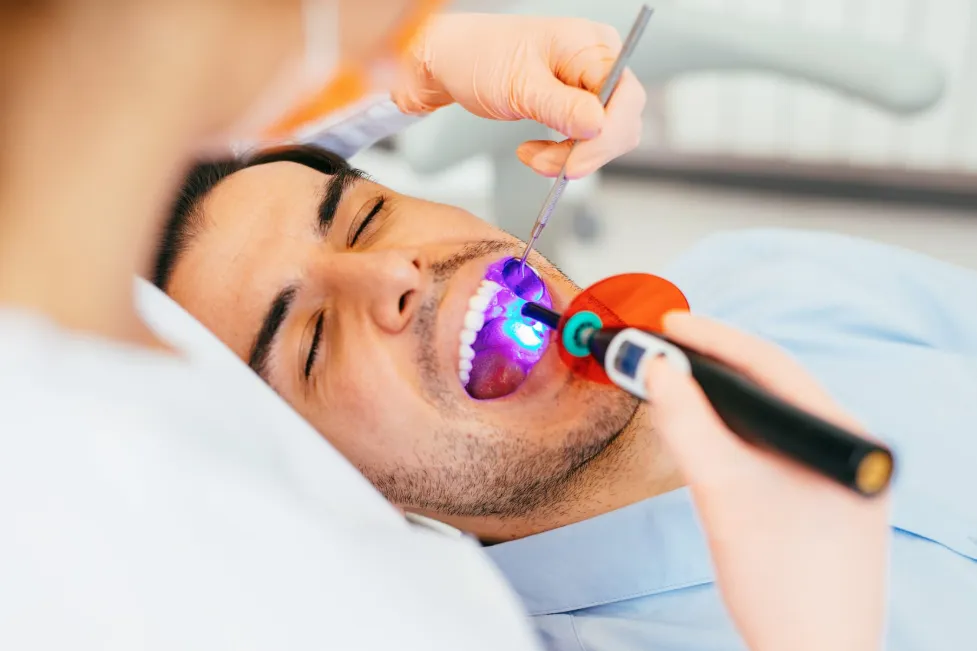
- The dentist paints on the sealant and uses a special light to harden it.
The tooth stays fully intact. There is no drilling. There is no numbing. Children can sit up and talk right after the visit.
3. Fluoride and sealants cut costs and pain over time
Cavities hurt. They also drain your budget. Fillings, crowns, root canals, and extractions each carry a higher cost than a simple protective visit. Fluoride and sealants reduce the odds that you will need those treatments.
Here is a simple comparison of typical care.
| Treatment type | Main purpose | Average visits needed | Likely comfort level |
|---|---|---|---|
| Fluoride treatment | Strengthen enamel and reduce decay risk | One short visit during a checkup | No pain for most patients |
| Dental sealant | Block food and germs in back tooth grooves | One visit for several teeth | No pain for most patients |
| Tooth filling | Treat active cavity | One visit per tooth | Possible shots and soreness |
| Root canal | Save tooth with deep infection | One or more visits per tooth | Longer visit and healing time |
Preventive care is often covered at a higher rate by insurance. Even without insurance, fluoride and sealants usually cost less than a single filling. You also protect your time. You avoid repeat trips for emergency care and follow-up visits.
You gain three clear wins. You feel less pain. You spend less money. You lose less time from work and school.
4. Preventive treatments support children and adults with a higher risk
Some people face a higher risk of tooth decay. This includes children with baby teeth in hard to clean spots. It also includes adults with dry mouth, many past fillings, or certain medical treatments.
Fluoride and sealants give extra support in these cases.
- Children get a strong start before habits are set.
- Teens protect newly erupted molars that are very open to decay.
- Adults protect teeth that already have wear and tear.
This is especially important where access to care is limited. When you protect teeth early, you reduce the chance of painful infections that might send you to urgent care. You also reduce the chance of losing teeth and needing dentures or implants later in life.
Guidance from the National Institute of Dental and Craniofacial Research supports early and regular preventive care.
How to decide if fluoride and sealants are right for your family
You do not need to guess. You can ask your dentist three simple questions.
- Do you see early signs of weak enamel or white spots?
- Do my back teeth or my child’s back teeth have deep grooves?
- How often have we needed fillings in the last few years?
If the answer shows frequent decay or hard-to-clean teeth, fluoride and sealants are a strong option. You can also share your daily habits. Mention snacks, drinks, and any dry mouth. This helps your dentist shape a plan that fits your real life.
Next, you can set a schedule. Many people receive fluoride once or twice a year. Children often receive sealants on new molars as soon as those teeth come in. You can pair these steps with daily brushing, flossing, and regular checkups.
Taking the next step
You deserve a mouth that feels calm, steady, and strong. Fluoride and sealant treatments give you that support with little effort. They protect against decay before it starts. They lower pain, cost, and stress.
At your next visit, ask about fluoride and sealants for you and your child. With a short talk and a simple treatment, you can protect your smile and stay ahead of the next dental problem instead of chasing it later.
