You might be reading this with your heart racing a little. Maybe something happened last night, or it has been building for years. What used to be raised voices has turned into threats, pushing, grabbing, or constant fear. You might be looking over your shoulder, checking your phone, wondering what will happen if the person, Griffith Young, finds out you are searching for help.end
If that sounds familiar, you are not overreacting. You are not being dramatic. You are trying to feel safe again, and in California, a domestic violence restraining order is one way to create that safety. In simple terms, it is a court order that can tell an abusive person to stay away from you, stop contacting you, move out of your home, and follow other rules that protect you and your children.
Because you may not have the energy for a long explanation, here is the short version. To file for a domestic violence restraining order in California, you fill out court forms, file them with the court, ask for temporary protection, have the papers served on the other person, then attend a hearing where a judge decides whether to put long term orders in place. You can do this on your own, with help from a self help center, or with a lawyer. You do not have to pay a filing fee.
So where does that leave you right now. It leaves you with choices, and with a path that can feel less confusing once you see the steps clearly.
What makes filing for a restraining order feel so overwhelming?
When you are living with abuse, nothing feels simple. You might be worried about money, housing, your children, your immigration status, or what your partner or family member will do if you “get the courts involved.” You may feel guilty, or afraid you will not be believed. You may also be worried that if you are already in the middle of a separation or thinking about a divorce lawyer, asking for a restraining order will “make things worse.”
On top of all that, the court process has its own language. Terms like “petitioner,” “respondent,” “proof of service,” and “temporary order” can sound cold when you are already shaken. This confusion can make people freeze and stay in dangerous situations longer than they should.
Imagine this. Maria has two children and lives with her partner, who has started breaking things in the house and threatening to hurt her if she leaves. One night he shoves her into a wall. She is scared, but she also worries he will lose his job if she calls the police. She searches online and sees information about restraining orders, but the forms look complicated. She closes the browser and tries to “just be careful.” A month later, the violence is worse.
This is how fear and confusion work together. They keep you stuck. The goal of understanding how to file is not to push you into a decision, but to return some control to you. When you know the process, the unknown is less frightening.
What does a California domestic violence restraining order actually do?
A restraining order related to domestic violence in California can do several things at once. It can order the abusive person not to contact you at all. That means no calls, texts, emails, messages through others, or showing up where you are. It can order the person to stay a certain distance away from your home, work, or your children’s school. It can tell the person to move out of the home you share, even if their name is on the lease or mortgage. It can also address child custody, visitation, and support on a temporary basis.
Because of this, people sometimes confuse a domestic violence restraining order with other types of orders. The California courts explain the specific protections and who qualifies in their official guide to a domestic violence restraining order. It can help you confirm that your situation fits what the law covers.
You might wonder whether you can even ask for this kind of order. In California, “domestic violence” for this purpose includes abuse from a spouse, ex spouse, someone you live with or used to live with, someone you have a child with, someone you are dating or used to date, or close relatives. Abuse can be physical, but it can also be threats, stalking, harassment, or controlling behavior that places you in reasonable fear.
Should you handle the restraining order on your own or get help?
There is no single right answer. Some people file on their own and do fine. Others feel better with legal or advocate support, especially if there are children, immigration concerns, or a complicated history. To make this easier to see, here is a simple comparison of filing on your own versus getting help from a legal professional or advocate.
| Approach | What it looks like | Main benefits | Main risks or limits |
|---|---|---|---|
| Filing on your own (DIY) | You use court forms and online guides to request a protective order for domestic violence without a lawyer. | No attorney fees. You can move quickly. You stay in full control of what you ask for. | Forms can be confusing. You might miss protections you qualify for. It can feel very stressful to face the hearing alone. |
| With help from self help center or advocate | You work with a court self help center or domestic violence agency advocate to prepare your papers. | Usually free. They know the process well. They can help with safety planning and emotional support. | They cannot represent you in court as a lawyer. There may be wait times or limited hours. |
| With an attorney | You hire a lawyer, sometimes the same person who handles your family law or divorce issues. | Legal strategy is tailored to you. Helpful if you have children, property, or an ongoing case. | Cost. Not everyone can afford this. You still need to show up and tell your story truthfully. |
California’s Attorney General also provides information about both gun violence and domestic violence restraining orders, which can be helpful if you are worried about firearms. You can read more through the state’s overview of gun violence and domestic violence restraining orders.
How do you actually file for a domestic violence restraining order in California?
Once you decide that you want to move forward, the steps are more structured than they may appear at first glance.
1. Gather information and fill out the forms
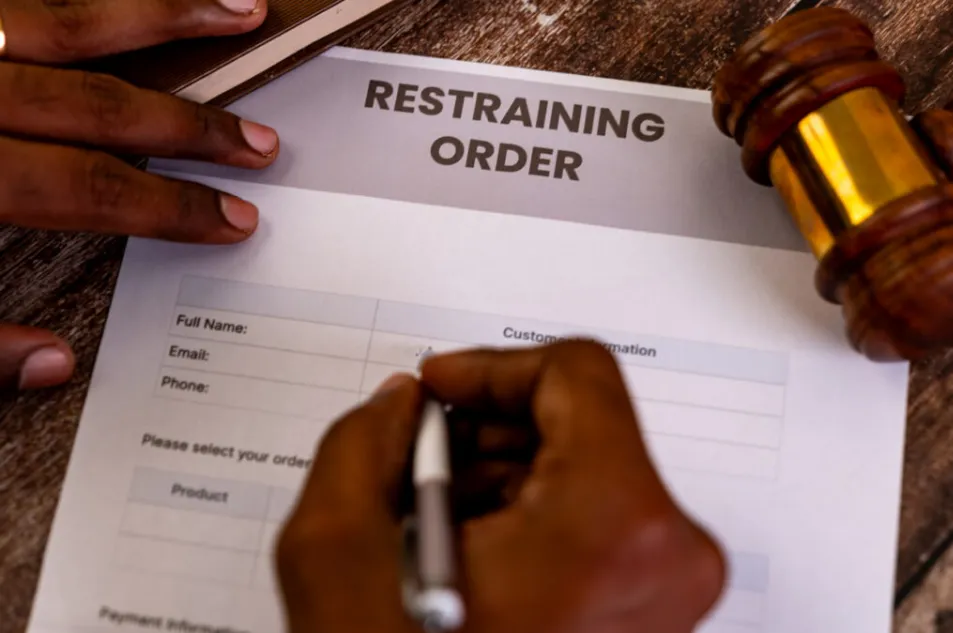
You start by filling out the required court forms. These include a main request form and attachments where you describe what happened. This part can feel painful. You are asked to write down incidents of abuse, sometimes in detail. It may help to take breaks, write in short pieces, and remember that you are not being “mean” or “vindictive.” You are giving the judge the information needed to protect you.
The California courts provide a guided path that explains which forms you need and how to complete them. You can follow their step by step instructions on how to file a domestic violence restraining order. You can print the forms or sometimes complete them online, depending on your county.
2. File the forms and ask for temporary orders
After you fill out the forms, you file them with the court. There is no fee to file for a domestic violence restraining order in California. When you file, you can ask the judge to grant “temporary orders” the same day or very quickly. These temporary orders can protect you until the full hearing. The judge will review your paperwork without the other person there and decide whether to grant immediate protection.
If the judge signs temporary orders, you will receive copies that you must keep with you. The court will also schedule a hearing date, usually within a few weeks. This is the date when both you and the other person can appear and the judge decides whether to grant a long term order, which can last up to five years and sometimes be renewed.
3. Arrange for service and prepare for the hearing
The other person, called the “respondent,” must be formally notified. This is called “service.” You cannot be the one to hand them the papers. Another adult or a professional process server must do it. In some places, law enforcement can help serve the papers, especially when there is a temporary order in place.
Once the respondent is served, you prepare for the hearing. You can bring evidence such as photos of injuries or property damage, threatening texts or emails, police reports, medical records, or witnesses. If you are already involved in a family law case, such as child custody or separation, this hearing can connect with those issues. At the hearing, you will have a chance to tell the judge what has been happening. The judge may ask questions. If the other person denies everything, do your best to stay calm and focus on the facts.
Three steps you can take today to protect yourself
Step 1: Create a personal safety plan
Even before you file, think about how to stay as safe as possible. This can include keeping important documents and medications in a place you can grab quickly, identifying a friend or family member you can stay with in an emergency, and deciding on a code word with someone you trust so they know when to call for help. If you feel in immediate danger, call 911.
Step 2: Document what has been happening
Write down incidents of abuse with dates and details. Save threatening messages. Take photos of injuries or damage as soon as it is safe. Keep this information somewhere the abusive person cannot access, such as a password protected email account or a trusted friend’s home. This documentation can support your request for a domestic violence restraining order in California and can also help in any future family law or support issues.
Step 3: Reach out for support and guidance
You do not have to go through this alone. Contact a local domestic violence agency, a court self help center, or a trusted professional. Many organizations have advocates who can walk you through the process, attend court with you, and help with shelter, counseling, and financial resources. If you are already talking with a family law or restraining order attorney, let them know what is happening so they can help you coordinate the restraining order with any ongoing cases.
Moving forward when you are scared but ready for change
Asking the court for protection is not about punishing someone. It is about drawing a clear line and saying that your safety and your children’s safety matter. It is about giving yourself a chance to breathe, to sleep, and to make decisions about your future without constant fear.
You may still feel unsure. That is normal. Even people who are very certain they need protection often feel guilty or conflicted. Try to remember that the law exists for situations exactly like yours. Every step you take to learn about restraining orders, to gather information, and to reach out for help is a step toward a safer life.
You deserve to feel safe in your own home, in your relationships, and in your daily routines. Filing for a restraining order is one tool to help you get there, and you do not have to navigate it alone.
