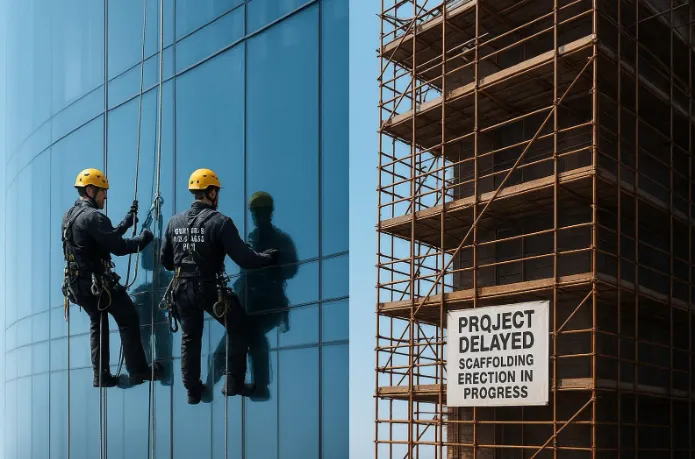
When you compare rope access with traditional methods, the result is clear: rope access is usually far more cost-effective and efficient for most inspection, maintenance, and repair jobs. Traditional methods like scaffolding are still the norm for heavy construction and work that needs strong, load-bearing structures, but they are often slower, more expensive on labour, and more disruptive to normal operations. For modern facility managers and developers, choosing the right method can be the difference between finishing under budget or watching costs and timelines spiral.
In today’s fast-paced industrial environment, businesses want to streamline operations without reducing safety. In busy cities where space is limited, many are turning to specialist RAIL – rope access services to deal with the logistical problems of city-centre maintenance. By choosing lighter, flexible methods instead of bulky equipment, companies can avoid long permit processes and physical obstacles that come with traditional access systems.
Rope Access vs. Traditional Methods: What’s the Difference?
What Is Rope Access?
Rope access is a specialist work-at-height method that grew out of mountaineering and caving and was adapted for industry so workers can safely reach high or hard-to-reach places. It uses highly trained technicians who rely on ropes, harnesses, and certified anchor points to position themselves where they need to work. The system always uses two separate lines: a main working rope and a backup rope, so the technician stays secure even if the main line fails.
Rope access is much more than simply hanging on a rope; it is a tightly controlled trade governed by international groups such as IRATA (Industrial Rope Access Trade Association) and SPRAT. These technicians usually have other professional skills-such as welding, painting, or inspection-and use rope access as their way of getting to their “office in the sky.” It is a low-impact method that keeps the footprint small while keeping safety standards very high.
What Are Traditional Access Methods?
Traditional access methods are the long-used standards for working at height: scaffolding, cranes, ladders, and Mobile Elevating Work Platforms (MEWPs) like cherry pickers and scissor lifts. These methods use temporary structures or powered machines to lift workers and materials to the height required. Scaffolding, for example, involves building a frame of metal or wood from the ground upwards to form a stable platform that many workers can stand and move around on.
These methods are familiar and can feel reassuring because they appear solid and permanent. But they are often large, awkward, and visually intrusive. Scaffolding can cover the outside of a building for months, and cranes and MEWPs need a lot of ground space and firm, level surfaces to be safe. They have been the standard choice for decades mainly because they can move heavy items and support large teams over big areas at the same time.
When Is Each Method Commonly Used?
The choice between rope access and traditional methods usually depends on the size and type of work. Traditional systems like scaffolding or cranes are often used on big construction projects that need strong, weight-bearing support or where many workers must stay at one level for a long time. If you are laying bricks across an entire facade or fitting large steel beams, a fixed platform is often the only realistic option.
Rope access, on the other hand, is ideal for inspections, light maintenance, cleaning, and repairs in tight or complex spaces. It is widely used for servicing wind turbines, inspecting the undersides of bridges, and repairing high-rise facades where cranes cannot reach. When the aim is to access the area quickly, complete a specific task, and leave with as little disruption as possible, rope access is usually the better choice.
Cost Comparison: Rope Access vs. Traditional Methods
Direct Cost Factors for Rope Access
The direct costs of rope access are mainly linked to specialist equipment and the high level of training required. Rope access teams are small-often two or three people-so labour costs are much lower than for large scaffolding crews. The gear, while technical and certified, is compact and does not need heavy vehicles or machinery to move it, which keeps transport and setup costs down.
Rope access technicians are also often multi-skilled, so one team can handle both access and the actual repair or inspection work. This means you do not need separate contractors for access and for the trade itself, which cuts the overall bill even further. In many cases, businesses can save between 30% and 70% of their budget by using rope access instead of scaffolding for maintenance jobs.
Direct Cost Factors for Traditional Methods
Traditional methods tend to be expensive before any real work starts. Scaffolding requires a big spend on materials, transport, and the labour needed to assemble and then dismantle the structure. Hire contracts often include minimum rental periods, so a one-day repair can still mean paying for weeks of scaffold rental if it cannot be removed straight away.
For powered equipment like MEWPs or cranes, the costs include daily hire rates, fuel, and the wages of trained operators. These systems also usually need more staff to manage site safety and equipment operation, pushing up the hourly cost of the project. When you add in the time needed to build or set up these systems, labour alone can quickly become very expensive.
Hidden and Indirect Costs
Beyond the clear costs of equipment and labour, traditional access methods often create hidden expenses. Scaffolding may need local council permits to close pavements or roads, which means paying fees and waiting for approvals. There can also be production losses; if a factory must stop a line to fit a large scaffold tower, the lost output can cost more than the repair itself.
Rope access avoids most of these problems. Because the setup is light and compact, it rarely needs road closures or business shutdowns. There is also an environmental angle: traditional methods create more waste and have a higher carbon footprint due to transporting and handling heavy materials. Rope access is a lower-impact option that fits better with modern sustainability targets.
Long-Term Value and ROI
Looking at long-term value and return on investment (ROI), rope access equipment offers long service life and reliable performance. Good-quality ropes, harnesses, and hardware, when inspected and maintained properly, keep working safely for many years. This keeps replacement costs down over time. Faster project completion also helps keep buildings and facilities open, supporting ongoing income.
Traditional systems, on the other hand, often suffer from heavy wear. Scaffold tubes, boards, and fittings can rust, bend, or break during use, transport, and storage, so they need regular repairs and replacements. As these materials degrade, they can affect both safety and productivity, reducing ROI compared with the lighter, more durable nature of rope access setups.
Key Efficiency Considerations for Each Method
Setup and Mobilization Time
Time efficiency is one of rope access’s biggest strengths. A rope access team can often be on site and working within hours. They only need to choose secure anchor points, rig their ropes, complete safety checks, and then start work. This fast setup is especially useful for emergency jobs or tight deadlines, where delays are costly.
Traditional methods are much slower to get going. Building scaffolding around a medium-sized building can take several days or even weeks. This long setup pushes back the start of the real work and stretches the whole project timeline. Even using a cherry picker takes time for delivery, positioning, stabilising, and safety inspections before anyone can go up.
Project Duration and Completion Speed
Once work starts, rope access technicians can move very quickly. Using ascenders and descenders, they can shift between heights and positions far faster than someone climbing scaffolding or waiting for a lift basket to move. This freedom of movement makes a big difference for jobs like window cleaning, facade surveys, or minor repairs across tall buildings.
Traditional methods are often slowed down by their own structures. Workers on scaffolding are restricted to the built levels, and moving between sections can take time. This lack of mobility increases total project time, especially for short jobs where building and removing the access system takes longer than the work itself.
Flexibility for Complex or Confined Projects
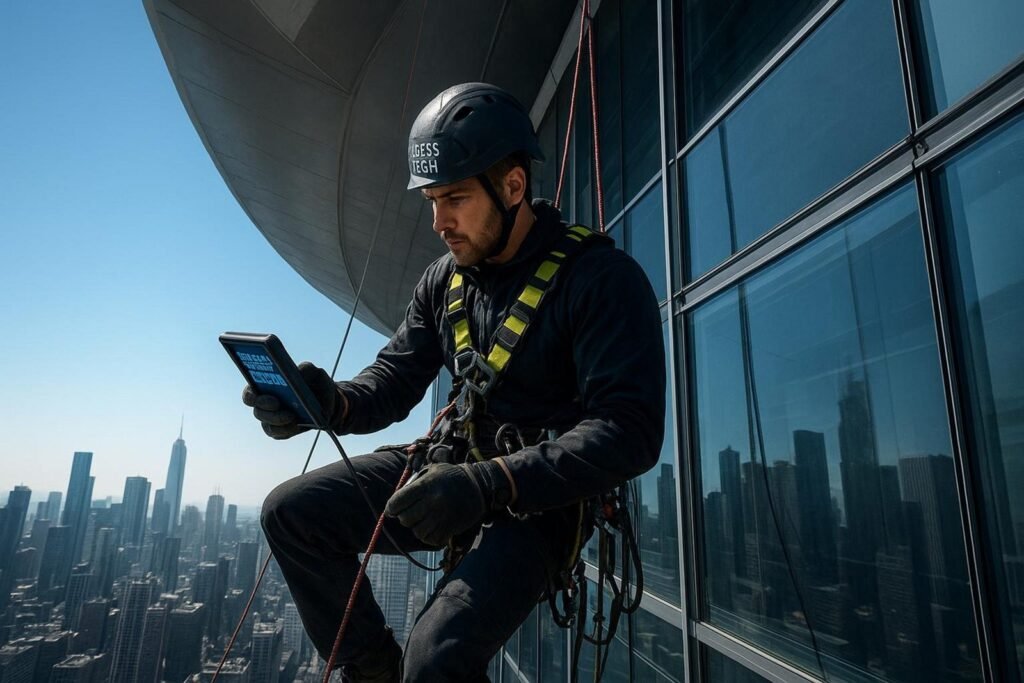
Many modern buildings have complex shapes: curved roofs, overhangs, recesses, and detailed facades that are very difficult to reach with traditional access. Rope access teams can move around these features easily, reaching places that a fixed scaffold or straight boom lift cannot. They are also highly effective in confined spaces, such as inside storage tanks, shafts, and narrow lightwells.
Traditional methods are limited by their need for a solid base and clear space. They need flat, stable ground and room to build, move, or swing. In dense city areas or on offshore platforms where ground space is limited, these needs are often impossible to meet. Rope access offers full three-dimensional movement, allowing technicians to approach the work from the quickest and most practical angle.
Impact on Ongoing Operations and Disruption
One of the biggest threats to efficiency on any site is disruption to normal activity. Scaffolding is bulky and highly visible, often blocking entrances, cutting off views, and creating extra hazards for pedestrians. This can upset tenants, customers, or visitors and may even force a business to close parts of its premises for safety.
Rope access is far less intrusive. Because workers come down from roof level or upper structures, the ground area stays mostly clear. There is no constant noise from large machines, no blocked doorways, and no heavy frames hiding the building. This lets the site stay open and active, so maintenance and repairs can take place in the background without harming day-to-day business.
Making the Right Choice: Cost, Efficiency, and Project Needs
The choice between rope access and traditional systems should be a planned, informed decision. Rope access often delivers immediate savings, but it also reflects a wider focus on safety and sustainability. The Health and Safety Executive (HSE) reports that falls from height remain one of the main causes of workplace deaths and injuries, with more than 60% of deaths in this category involving ladders, scaffolds, and platforms. Rope access, backed by strict IRATA training and double-rope safety systems, has a strong safety record that often exceeds that of these older methods.
Looking ahead, the industry is clearly moving toward faster, more flexible ways of working. As cities become denser and environmental rules tighten, the small footprint and low impact of rope access make it an increasingly attractive choice for long-term maintenance planning. It is not just about saving money on the next job; it is about choosing a method that supports efficiency, safety, and sustainability over the long term. Whether you manage a high-rise office tower or a remote industrial site, understanding how these methods differ will help you choose the best access solution for your project.
