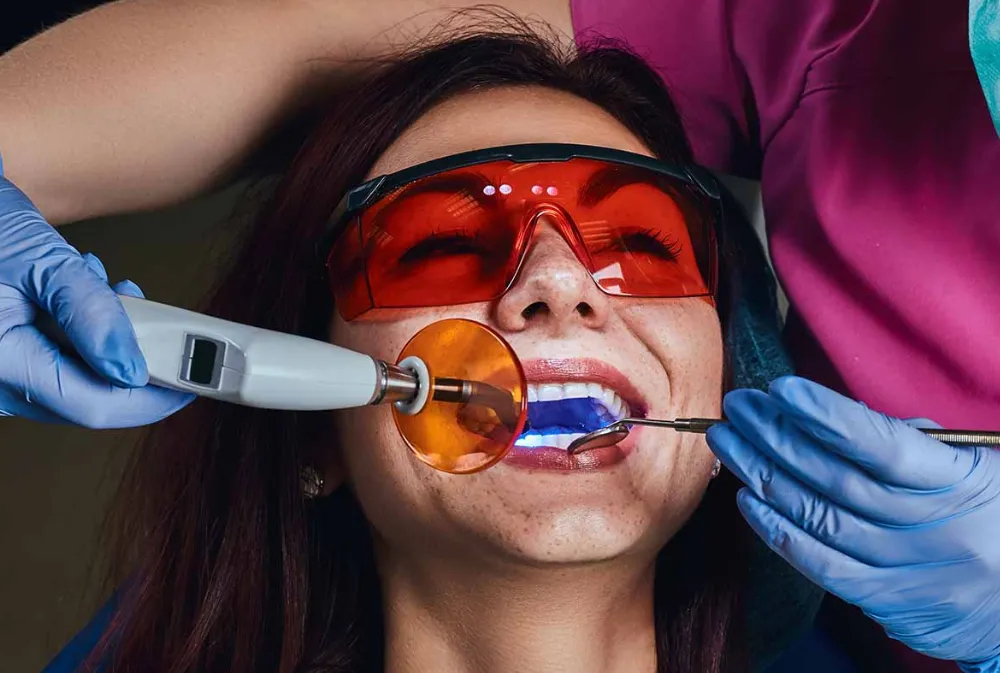
Laser therapy is changing how you protect your gums and teeth. You may feel scared or worn down by bleeding gums, loose teeth, or deep cleanings that never seem to be enough. You are not alone. Gum disease can steal your comfort, your confidence, and even your teeth. Today, your dentist can use focused light to remove infected tissue, clean deep pockets, and support healing with less pain and less swelling. This method can help save teeth that once seemed hopeless. It can also prepare your mouth for strong options like implant supported dentures in Woodbridge, VA. You gain cleaner roots, tighter gums, and a safer space for new teeth. You spend less time in the chair and more time living your life. This blog explains how laser therapy works, who it helps, and what you can expect before, during, and after treatment.
What gum disease does to your mouth and body
Gum disease starts with plaque. Plaque holds germs that inflame your gums. First your gums bleed when you brush. Then they pull away from your teeth. Pockets form. The bone starts to shrink. Teeth loosen. Some fall out.
Gum disease also links to heart disease, diabetes, and pregnancy problems. The Centers for Disease Control and Prevention explains that almost half of adults over 30 show signs of gum disease. An untreated infection keeps spreading. It drains your energy and your wallet.
You deserve a mouth that feels steady and clean. Laser therapy gives one more tool to control this infection.
How laser therapy works in periodontal care
Laser therapy uses focused light to target diseased gum tissue and germs. Your dentist moves a thin tip along the gum line and inside pockets. The light removes infected tissue and kills germs. Healthy tissue stays.
Next, your dentist smooths the root surface. This step, called scaling and root planing, helps the gum reattach. The laser then passes again to clean the pocket. A clot forms and seals the tissue.
You often need less numbing. You feel less soreness after treatment. Gums tend to bleed less during the visit. Many people return to normal routines the same day.
Laser therapy versus traditional gum surgery
Traditional gum surgery uses a scalpel and stitches. It still helps many people. Yet it can feel rough. Laser therapy offers a different path for many cases of moderate or severe gum disease.
| Feature | Laser periodontal therapy | Traditional gum surgery |
|---|---|---|
| Tissue cutting | Light removes diseased tissue with no scalpel | Scalpel cuts gum tissue |
| Stitches | Often not needed | Commonly used |
| Bleeding during treatment | Usually reduced | Often higher |
| Typical soreness | Milder for many people | Can feel stronger |
| Time in chair | Often shorter visits | Often longer visits |
| Healing time | Many return to normal routines quickly | Healing can take more time |
Not every mouth can use laser therapy alone. Sometimes your dentist still needs traditional surgery. The best plan depends on pocket depth, bone loss, and your health.
Who might benefit most from laser treatment
You may gain from laser therapy if you have
- Bleeding gums that do not improve with cleanings
- Pockets deeper than four millimeters
- Loose teeth that still have enough bone to save
- Health concerns that make slower healing risky
Children rarely need this care. Adults and older adults use it more often. People with diabetes or heart disease may feel relief when the gum infection shrinks. That relief can also support better control of blood sugar and blood pressure.
The National Institute of Dental and Craniofacial Research notes that early treatment of gum disease helps prevent tooth loss.
Preparing your mouth for implants and dentures
Gum and bone health must come first before implants or dentures. Infection around a tooth can spread to a new implant. Bone loss can weaken support.
Laser therapy helps by
- Reducing germs before extractions or implant surgery
- Cleaning deep pockets that block healing
- Helping gums tighten around remaining teeth
This cleaner base allows better support for implants, bridges, or dentures. You gain a stronger bite and clearer speech. You also reduce the chance of sore spots and repeat repairs.
What to expect before, during, and after treatment
First, your dentist reviews your history. You talk about pain, bleeding, loose teeth, and past care. X-rays and gum measurements show pocket depth and bone loss. Together, you choose the best plan.
During treatment, you sit in the chair like a normal cleaning. You receive numbing for comfort. You may hear beeps from the laser. You might feel warmth or slight pressure. Many people describe less fear than with cutting and stitches.
After treatment you may feel mild soreness. Gums can look red or puffy at first. Your dentist will likely ask you to
- Avoid smoking
- Eat soft foods for a short time
- Use special rinses
- Keep brushing gently along the gum line
Follow up visits track healing. Pocket depth often shrinks. Bleeding reduces. Breath smells fresher. You feel more willing to smile.< Follow-upHow to support healing at home
Your daily habits decide if results last. You can support healing by
- Brushing twice each day with a soft brush
- Cleaning between teeth with floss or small brushes
- Limiting sugary snacks and drinks
- Keeping regular checkups and cleanings
Set small goals. Pick one habit to fix this week. Then add another next week. Steady effort protects your treatment.
Making a clear choice for your gums
Gum disease does not heal on its own. Delay leads to tooth loss and higher medical costs. Laser therapy gives you one more path to stop the damage and protect your health.
You deserve clear facts, not fear. Ask your dentist three direct questions. First, how severe is your gum disease. Second, could laser therapy help your mouth. Third, what steps can you take this month to keep your gums firm and pain free.
Strong gums support steady teeth, steady speech, and steady meals with the people you love. That strength starts with one honest talk and one clear plan.
