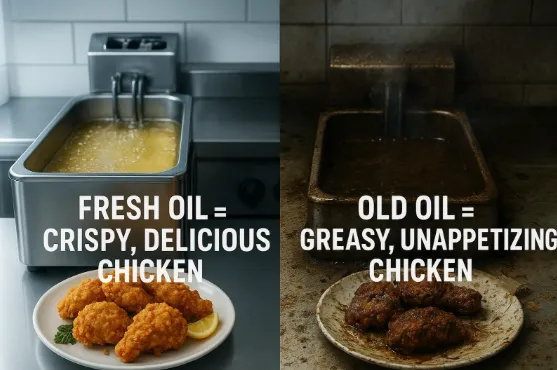
Using bad fry oil without knowing is a common kitchen mistake that leads to more than a soggy meal; it sends harmful free radicals and broken-down compounds into your body and robs your food of flavor and crunch. When oil is heated again and again, it goes through chemical changes that create polar compounds and acrylamides, which can harm your health.
To catch problems early, you need to pay close attention to what you see, smell, and feel in the pan-changes in color, odor, and how the oil behaves as it heats tell you a lot.
The shift from “perfectly seasoned” oil to “seriously damaged” oil can be easy to miss. Many home cooks and restaurant chefs focus on how the food looks, but the oil itself gives you warnings long before you take a bite. Learning to notice these early signs is the best way to keep fried food a treat instead of a health risk.
What Happens If You Use Bad Fry Oil Without Knowing?
Immediate and Long-Term Health Risks
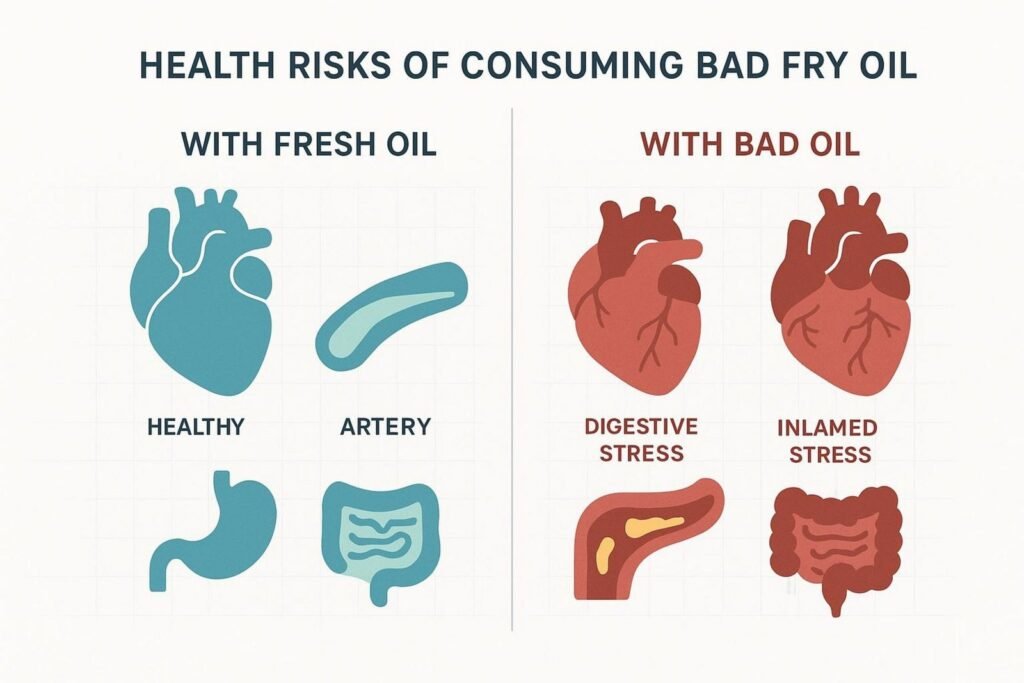
When you unknowingly cook with oil that is past its useful life, you are taking in more than just fat. Oxidation and high heat break the oil down and create a mix of free radicals. These unstable molecules can cause oxidative stress in the body, which is linked to cell damage. Right away, this might show up as mild stomach upset, but over time, eating damaged oils can feed ongoing inflammation.
As oil continues to break down, it forms secondary oxidation products like aldehydes. These are more than bad-tasting compounds; they are reactive chemicals that studies have linked with possible toxicity. By the time the oil clearly smells “rancid,” it has already gone through major chemical changes that make it unfit to eat.
Impact on Food Flavor, Smell, and Texture
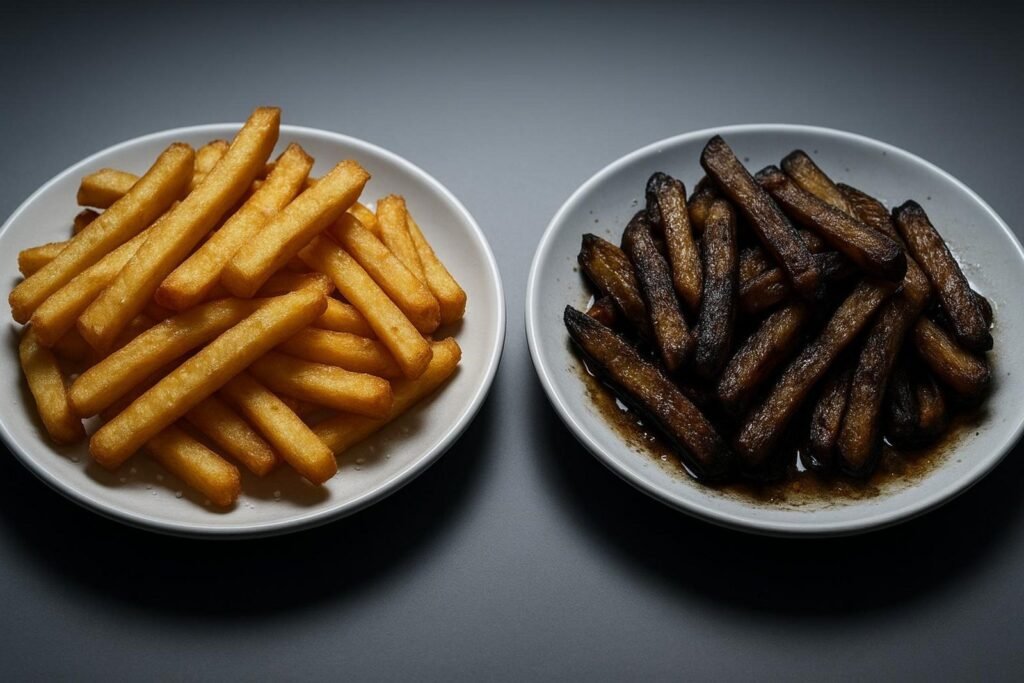
Bad oil can ruin the taste of a dish. Fresh oil lets the real flavors of the ingredients stand out and gives a clean, crisp finish. Old oil leaves a “heavy,” “stale,” or “soapy” aftertaste. This happens because the fatty acids in the oil have broken into smaller, strong-smelling molecules that the food absorbs easily.
Texture also gets worse. As oil degrades, it often gets thicker. This heavier, more syrup-like oil does a poor job of pushing away moisture. Instead of forming a steam barrier that keeps the inside moist and the outside crisp, old oil seeps into the batter or crust. The result is greasy, floppy food that stays oily, no matter how long you drain it on paper towels.
Potential for Contamination and Foodborne Illness
While frying temperatures usually kill most bacteria, bad oil can still carry problems. Over time, tiny food bits-crumbs of flour, protein, and moisture-collect at the bottom of the fryer. If oil is reused many times without being filtered, these bits burn, break down, and can support impurities when the oil cools and is stored.
Moisture in old oil also creates trouble. It can cause steam pockets and dangerous splattering, and it speeds up the breakdown of the oil’s chemical bonds (hydrolysis). This makes the oil spoil faster and leaves it more open to outside contaminants during storage between uses.
What Are the Signs of Bad Fry Oil?
Unusual or Off Odors
Your sense of smell is your best tool here. Fresh frying oil should smell neutral or maybe slightly nutty. If you pick up scents like fish (even when you haven’t fried seafood), paint thinner, or a harsh, sour, acrid smell, the oil has gone bad. These odors come from volatile organic compounds released as the fat molecules break apart.
Smell the oil both when it is cold and as it heats. Sometimes the rancid smell is mild or hidden at room temperature but becomes strong as the oil warms up. If the air in your kitchen feels heavy or smells more like a mechanic’s shop than a restaurant, it’s time to throw that oil out.
Darkening or Cloudiness in Oil
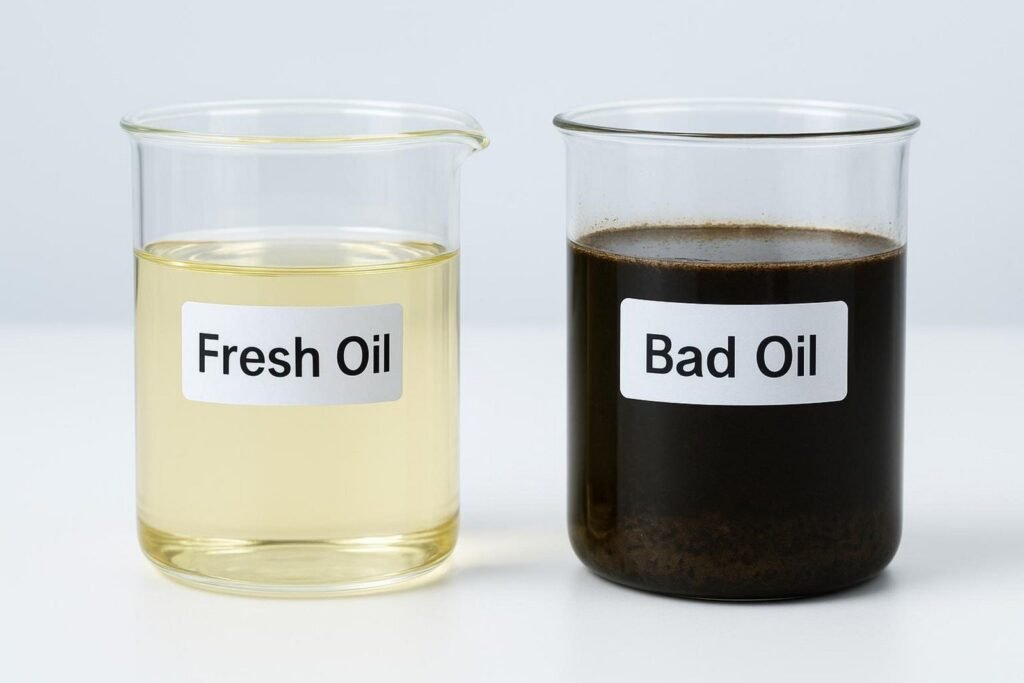
It is normal for oil to get a little darker after the first use-especially with breaded foods-but a deep, cola-like brown color is a serious warning. This dark color comes from burned food particles and chemical reactions called polymerization. If the oil looks opaque or muddy instead of clear, the level of total polar materials (TPM) is likely very high.
Cloudiness is another warning sign. If clear oil has turned milky or hazy at room temperature, it may be holding extra moisture or broken fats from past cooking. Cloudy oil often foams or splatters a lot once heated, which is another clue that it’s time to replace it.
Foaming or Excessive Smoke During Cooking
One of the most serious frying oil warning signs is a much lower smoke point. Fresh vegetable oil usually smokes around 400°F to 450°F. As oil wears out, its smoke point can drop well below 350°F, which is a normal frying temperature. If your oil starts to smoke before it’s hot enough to cook properly, it’s unstable and should be thrown away.
Foaming is just as concerning. If you add food and see a soapy-looking foam that hangs on the surface instead of normal bubbling, the oil’s surface tension has changed. This usually comes from a buildup of surfactants created by oil breakdown and moisture. Foam raises the chance of a boil-over, which can spill hot oil and start a fire.
Sticky or Gummy Residue on Surfaces
If you see a sticky, amber film on the rim of your fryer, the sides of your pot, or nearby surfaces, that is more than a simple oil spill. It is a sign of oil polymerization-where the oil starts forming plastic-like chains. With repeated heating, oil molecules join together into long chains and create a varnish-like layer.
If this sticky “gum” is on your equipment, it is almost certainly present throughout the oil. This residue is very hard to clean and clearly shows that the oil has been pushed well past safe use. Cooking with oil in this state sends those large polymer chains into your food and then into your digestive system.
How to Check If Fry Oil Is Still Safe to Use
Simple At-Home Tests for Oil Freshness
You can test oil at home without any gadgets. One easy method is the “white bread test.” Drop a small cube of white bread into oil at about 350°F. If it takes more than 60 seconds to brown or comes out smelling like stale cardboard, the oil is worn out. You can also try a “glass test”: pour a little room-temperature oil into a clear glass. If you can’t see through it clearly or notice a cloudy or gritty layer that does not settle, throw it out.
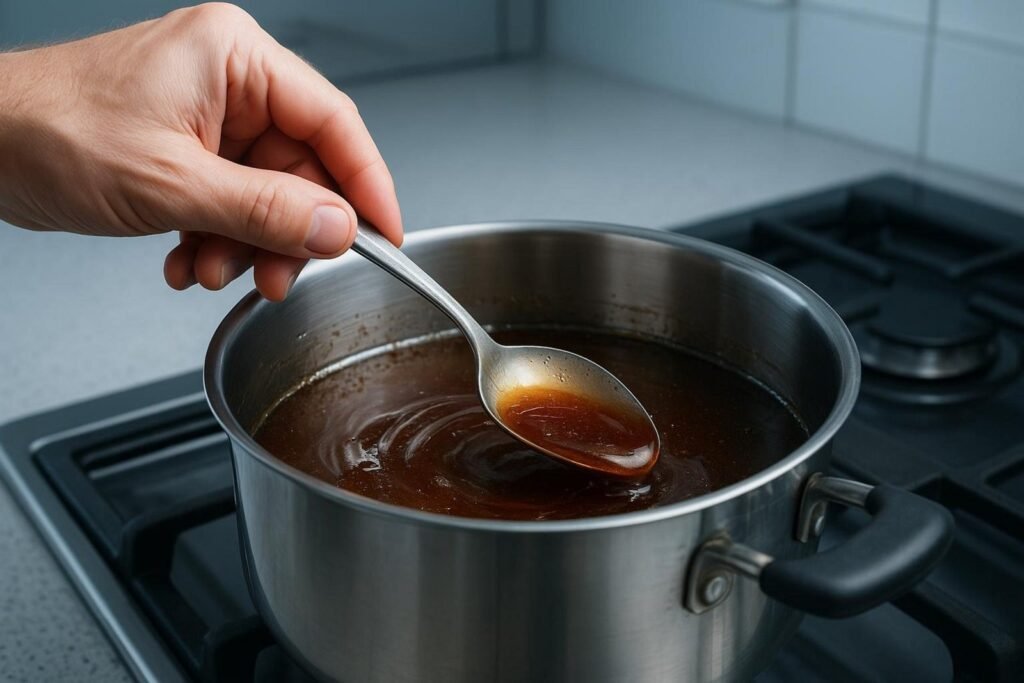
Another check is the “swirl test.” Stir the cold oil gently with a spoon. Fresh oil moves easily and runs off the spoon quickly. Old oil looks thicker, like light syrup, and clings to the spoon or container walls longer than normal.
When to Change Fry Oil: Recommended Guidelines
There is no single rule for how long to keep used oil. It depends on what you are frying and how often. As a general guide, oil used for breaded or floured foods (such as fried chicken) usually lasts 3 to 4 uses. Oil used for “clean” foods like potatoes or plain vegetables can sometimes last 6 to 8 uses, as long as you filter it after each session.
Restaurants often use TPM (Total Polar Materials) test strips to measure oil breakdown. At home, your best guide is your senses. Change the oil whenever you notice any of the warning signs listed earlier-no matter how few times you think you have used it. If you aren’t sure, throwing it away is the safest choice.
Differentiating Between Expired and Rancid Oil
There is a difference between oil that has gone “expired” in the bottle and oil that has become “rancid” from cooking. Expired oil has sat too long on the shelf; the seal may have let in oxygen, slowly damaging the fats. This oil smells off even before heating and should not be used.
Rancid oil from use is damaged by heat. It may have been fine at the beginning of the week, but repeated heating, water from food, and exposure to air speed up its breakdown. Both expired and used-up oils are unsafe, but rancid used oil is often harder to recognize until it is hot and in the pan.
Health Implications of Cooking with Bad Fry Oil
Increased Cancer and Heart Disease Risk
The biggest health worry with worn-out oil is the creation of trans fats and cyclic fatty acid monomers. Even if many store-bought oils start with low trans fat, repeated high heat can create them in your fryer. Eating trans fats raises LDL (“bad”) cholesterol and lowers HDL (“good”) cholesterol, which raises the risk of heart disease.
Old oil also boosts the formation of acrylamides-a chemical that can form in certain foods during high-heat cooking like frying. Acrylamides are listed by health agencies as possible cancer-causing substances. Using fresh oil lowers the amount of these harmful compounds in your meals.
Digestive Issues and Food Sensitivities
Old oil is tougher on your digestive system. Because it has partly thickened and formed larger molecules, your stomach and gallbladder need to work harder to break it down. This can lead to bloating, heartburn, and nausea after eating fried food.
Some people who think they “can’t handle fried food” are actually reacting to the breakdown products in badly maintained oil. These damaged fats can irritate the lining of the gut and cause symptoms that look like more serious digestive problems, when the simple fix may be to fry with fresher oil.
Possible Allergic Reactions or Toxic Compounds
Reusing oil again and again increases the chance of cross-contamination. If you fry shrimp and later cook French fries in the same oil, the fries can cause an allergic reaction in someone with a shellfish allergy. Proteins from the shrimp stay in the oil even after it cools.
At very high levels of breakdown, oil can also form 4-hydroxynonenal (HNE), a toxin linked to several degenerative diseases. Reaching this level takes a lot of abuse, but because you can’t see these compounds, it is safer to be cautious and avoid pushing oil that far.
Best Practices for Maintaining Fry Oil Quality
Proper Oil Storage Methods
To make your oil last longer, protect it from its three main enemies: light, heat, and air. Once the oil has cooled fully, pour it into a tightly sealed container. A glass jar or sturdy plastic container both work well. Keep it in a cool, dark place—such as a pantry. Avoid the cabinet above the stove, where heat speeds up spoilage. If you’re looking for professional solutions to optimize your kitchen’s efficiency, checking resources like https://savefryoil.com/ can help you extend fry-oil life and cut operating costs sustainably.
Some people like to store used oil in the fridge. This slows rancidity but can make the oil turn cloudy or even solid. This change in look is not spoilage; the oil will return to liquid form at room temperature. Chilling can be a smart way to extend the life of costly oils like peanut or avocado oil.
Tips for Filtering and Reusing Oil Safely
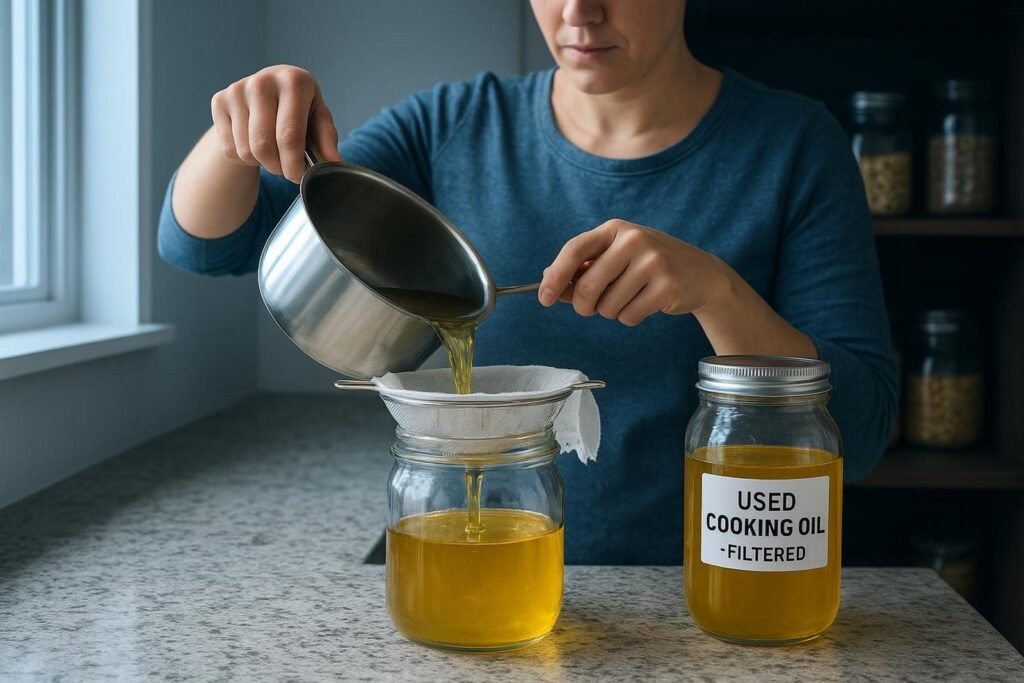
Filtering is the single most helpful step to keep oil in good shape. After each frying session, let the oil cool until safe to handle, then pour it through a fine-mesh strainer lined with a coffee filter or a few layers of cheesecloth. This removes tiny food bits that would otherwise burn and speed up breakdown the next time you cook.
Try not to mix different oils. If you started with canola oil, do not top it off with corn or sunflower oil. Each oil has its own smoke point and breakdown pattern. Combining them makes results harder to predict and can make the mix spoil faster.
How Often Should Fry Oil Be Changed?
Beyond the 3-to-8 use rule, think about how much food and what kind you fry. Large batches of frozen items introduce more water and ice crystals, which break oil down quickly. Light tasks like flash-frying herbs or crisping tortillas are easier on the oil, so it will stay usable longer.
| Food Type | Approximate Safe Uses |
| Breaded / Floured foods (chicken, cutlets) | 3-4 uses |
| Clean foods (potatoes, plain veggies) | 6-8 uses |
| Light tasks (herbs, tortillas) | Often more, if filtered well |
Always trust what you see, smell, and taste before you trust the calendar. If oil has sat in the fryer for more than two weeks, even if you only fried once, it is usually time to toss it. Air exposure and leftover tiny food particles will have already started oxidation, even without frequent use.
Frequently Asked Questions About Fry Oil Safety
Can You Use Fry Oil Past Its Expiration Date?
The date on a bottle of oil is mostly a “best by” guide for quality. If the bottle is unopened and stored in a cool, dark spot, it is often okay for a short time past that date. But once you break the seal, it starts aging much faster. If you open an out-of-date bottle and it smells like crayons, paint, or old nuts, throw it away. Starting with already-oxidized fat is not worth saving a few dollars.
What Should You Do with Bad Fry Oil?
Never pour used fry oil down the sink or toilet. As it cools, it thickens and sticks to the pipes, building up into “fatbergs” that can block drains and damage plumbing systems. Instead, pour the cooled oil into a non-recyclable container (such as an empty coffee can or milk carton) and put it in the regular trash.
Many cities also offer oil recycling programs. Used cooking oil can be turned into biodiesel, a renewable fuel. Check with your local waste or recycling service to see if there is a collection point near you. This is the best choice when you have a lot of waste oil to get rid of.
Key Takeaways: How to Avoid Hidden Dangers of Bad Fry Oil
Good frying depends on more than just knowing when the food is cooked; it also depends on how you care for the oil itself. One often ignored factor that shortens oil life is salt. Salt lowers the smoke point and speeds up breakdown. To keep your oil in better shape, always salt your food after it comes out of the fryer, not before it goes in. This small change can often give you one or two extra safe uses from the same batch of oil.
Think, too, about the “frugal cook” mindset. It’s tempting to squeeze one more batch out of dark, tired oil, but the price of new oil is small next to the cost of a ruined meal or future health issues. Treat frying oil like a fresh ingredient instead of something that lasts forever. That way, every fried dish you serve is both safer and tastier. Stay alert, trust your nose and eyes, and remember: for deep frying, a clear, clean oil is your best friend.
