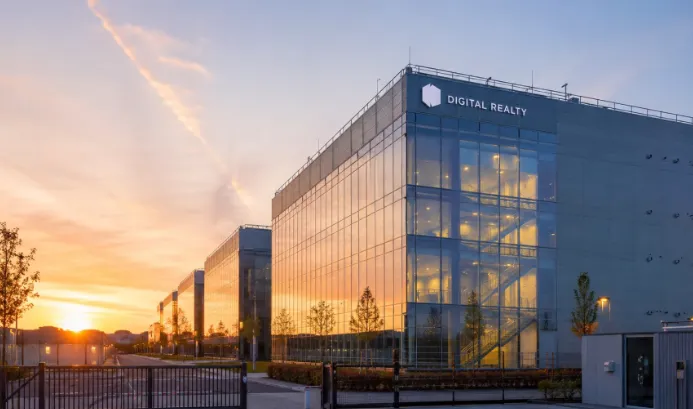
For several years, Frankfurt am Main has been considered Europe’s primary data center hub, but by 2026 its importance has grown even further. The rapid expansion of AI infrastructure, the development of cloud platforms, stricter data storage regulations, and increasing demand for digital services have turned Frankfurt into a key location for hosting IT infrastructure within the EU.
The city is home to major internet exchange points, cloud platforms, international telecom carriers, and dozens of Tier III data centers. As a result, companies looking for reliable colocation Frankfurt infrastructure with low latency and direct access to European networks continue to view the city as one of the strongest options in Europe.
Why Frankfurt Became Europe’s Main Data Center Hub
Several critical factors came together in Frankfurt simultaneously — a combination rarely found within a single region. The city is located near the center of Europe’s internet infrastructure and offers direct connectivity to the continent’s largest markets. From Frankfurt, companies can provide low-latency services not only across Germany, but also to France, the Netherlands, Switzerland, Austria, Poland, and other EU countries.
In addition, Frankfurt has historically served as one of Europe’s leading financial centers. After Brexit, Germany’s role as a stable jurisdiction for IT infrastructure became even stronger. Banks, fintech companies, SaaS platforms, and international enterprises increasingly began relocating infrastructure to Germany.
Germany’s engineering and utility infrastructure also played a major role. For the enterprise segment, the following factors are critical:
- stable power grids;
- infrastructure redundancy;
- predictable regulations;
- compliance with European data protection requirements;
- high carrier density.
As a result, Frankfurt evolved into more than just a city with a large number of data centers — it became a fully developed digital ecosystem.
DE-CIX – The Key Reason Behind Frankfurt’s Leadership
One of the main drivers behind Frankfurt’s growth has been DE-CIX, the largest internet exchange in Europe and one of the largest in the world. An enormous volume of international internet traffic passes through this exchange point every day.
For businesses, this provides several major advantages. First, it reduces latency between services and end users. Second, companies gain more stable connectivity to cloud platforms, telecom carriers, and international networks. Third, infrastructure scaling becomes significantly easier.
It was around DE-CIX that data centers, cloud platforms, and telecom hubs began rapidly expanding. Over time, this created a strong network concentration effect: the more companies deploy infrastructure in Frankfurt, the more attractive the location becomes for others.
Today, many international companies choose Frankfurt specifically because of the ability to obtain direct connectivity to:
- AWS;
- Microsoft Azure;
- Google Cloud;
- Oracle Cloud;
- Cloudflare;
- international Tier-1 carriers.
This is especially important for AI projects and high-load platforms, where latency and network stability directly impact service performance.
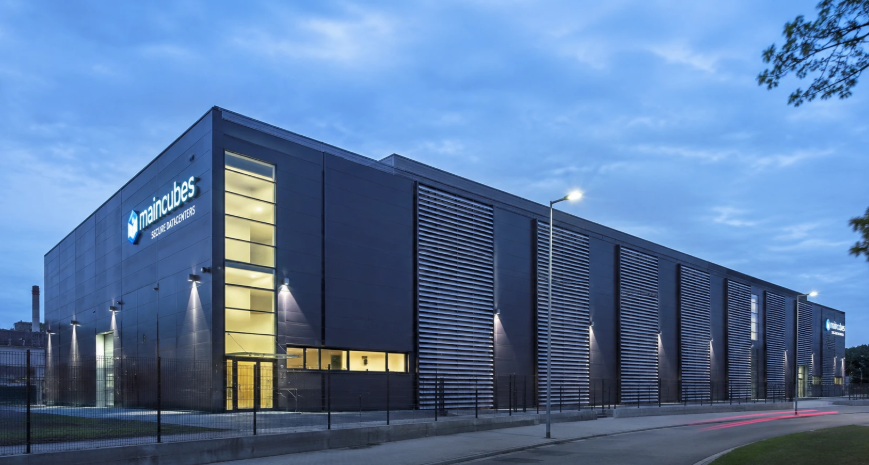
AI Infrastructure Growth Has Dramatically Increased Demand for Frankfurt Data Centers
In 2025–2026, the market faced a new challenge — the explosive growth of AI workloads. Large Language Models, GPU clusters, inference systems, and AI SaaS platforms require significantly more computing resources and power consumption compared to traditional enterprise systems.
Against this backdrop, Frankfurt gained an additional advantage thanks to its already established infrastructure:
- high connectivity density;
- a large number of carrier-neutral data centers;
- a mature cloud ecosystem;
- a strong enterprise customer base;
- access to international network routes.
Many companies began relocating AI infrastructure closer to European users in order to reduce latency and comply with data sovereignty requirements. In this regard, Germany is widely perceived as one of the most stable and predictable jurisdictions in Europe.
At the same time, AI workloads have dramatically increased power density requirements. While traditional server racks previously consumed around 5–10 kW, modern GPU clusters may require 30–80 kW per rack or even more. As a result, the Frankfurt market has started experiencing a shortage of available power capacity.
Power Consumption and Capacity Shortages in 2026
Frankfurt’s main challenge in 2026 is no longer connectivity, but power availability. Demand for capacity is growing faster than infrastructure expansion.
Many Frankfurt data centers are already operating close to the limits of available power resources. New projects require lengthy approvals, electrical grid upgrades, and major investments into cooling and power infrastructure.
The situation has become especially difficult for AI infrastructure, where rack-level power consumption is significantly higher than standard enterprise deployments.
As a result, several new market trends have emerged:
- rising colocation prices;
- waiting lists for power allocation;
- advance reservation of space and power;
- rapid adoption of liquid cooling technologies;
- relocation of some AI workloads to neighboring regions of Germany.
Nevertheless, Frankfurt continues to remain Europe’s primary hub, as alternative European markets are facing similar challenges.
Frankfurt vs Amsterdam, London, Paris, and Dublin
Despite growing competition from other European hubs, Frankfurt continues to maintain leadership across the most important factors.
Amsterdam was long considered one of Europe’s largest data center markets, but restrictions related to power consumption and regulatory policies have started slowing regional expansion.
London remains one of the world’s leading financial and cloud hubs, but after Brexit, some international companies began relocating infrastructure into the EU.
Paris is growing rapidly due to government investments and France’s AI initiatives. However, in terms of connectivity density and interconnection ecosystem maturity, it still trails Frankfurt.
Dublin remains a critical region for hyperscale cloud providers, but it is also facing serious power supply limitations.
Against this backdrop, Frankfurt appears to be the most balanced option for international companies that require:
- access to the EU market;
- low latency;
- a stable jurisdiction;
- a mature connectivity ecosystem;
- cloud neutrality;
- a high concentration of carriers and data centers.
Why International Companies Choose Germany for Infrastructure Hosting
For international businesses, Germany is viewed as one of Europe’s most reliable countries for hosting mission-critical infrastructure.
Companies evaluate several factors simultaneously:
- GDPR compliance and European regulations;
- predictable legal frameworks;
- advanced engineering infrastructure;
- a highly developed telecom ecosystem;
- access to the EU market;
- economic stability.
Germany’s reputation within the enterprise segment also plays an important role. For large organizations, a data center is not simply server space — it is part of a broader strategy related to risk management, compliance, and business continuity.
This is especially important for:
- fintech;
- healthcare;
- enterprise SaaS;
- manufacturing;
- AI platforms;
- telecom providers.
What to Consider When Deploying Infrastructure in Frankfurt
Despite the region’s advantages, companies must carefully evaluate current market limitations in advance. In Frankfurt, selecting a data center is no longer enough on its own. Businesses should assess:
- available power capacity;
- scalability options;
- cooling technologies;
- access to cloud connectivity;
- redundancy capabilities;
- cross-connect pricing;
- deployment timelines;
- proximity to DE-CIX;
- compliance requirements.
For AI workloads, power density and cooling capabilities have become particularly important. Not every facility is prepared to support high-density GPU clusters.
It is also important to consider that colocation pricing in Frankfurt continues to rise due to strong demand and limited supply.
Why Frankfurt Remains Europe’s #1 Colocation and Data Center Hub
By 2026, Frankfurt has firmly established itself as Europe’s leading data center hub. The combination of the continent’s largest internet exchange infrastructure, a high concentration of cloud providers, Germany’s stable legal environment, and a highly developed connectivity ecosystem makes the region a critical location for IT infrastructure deployment within the EU.
Despite rising prices, power shortages, and increasing energy consumption, demand for Frankfurt continues to grow — especially among AI projects, SaaS platforms, enterprise organizations, and international service providers.
